

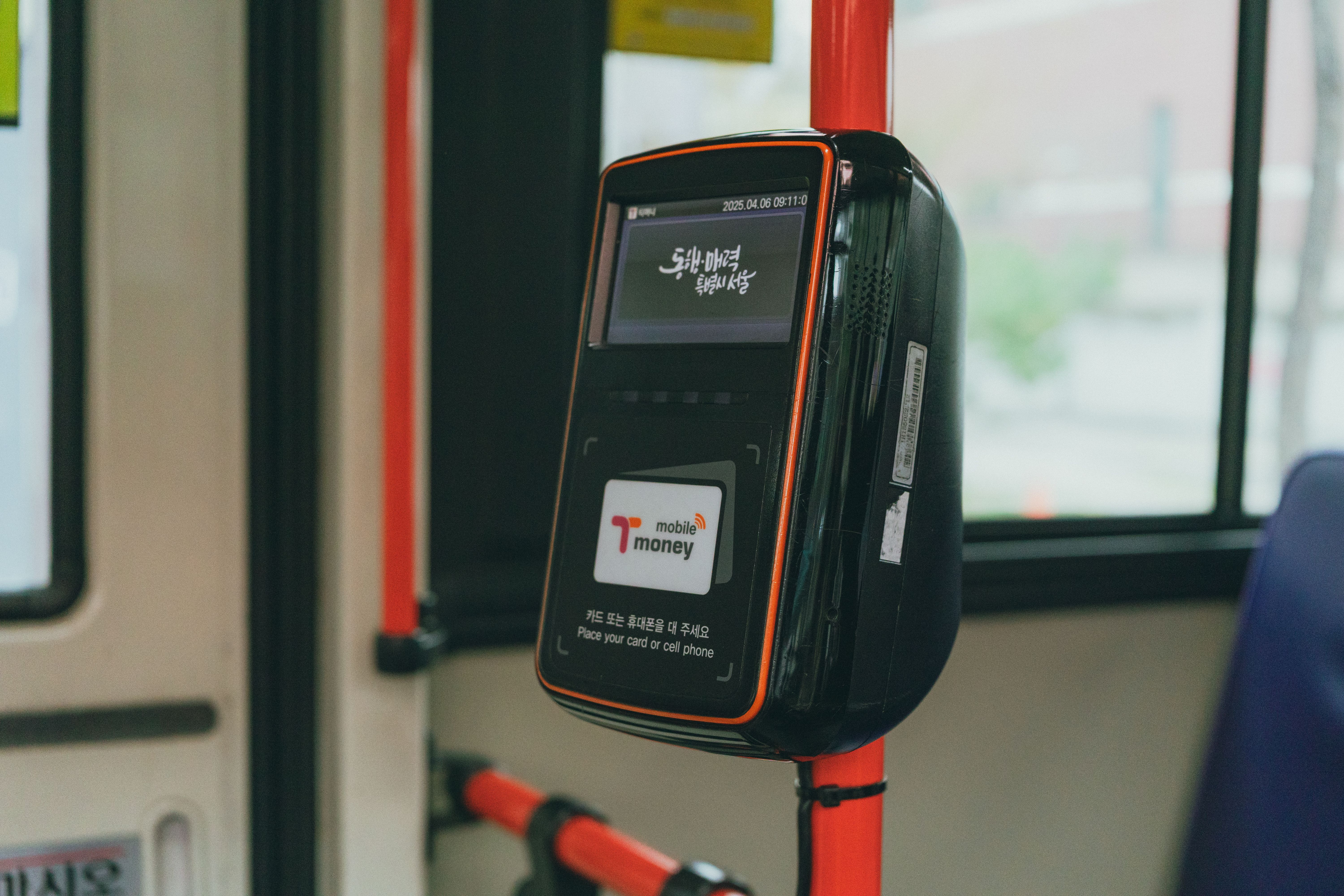
Korea has an extensive public transportation system.
In Seoul, buses and subways can take you to most major neighborhoods, attractions, hospitals, and clinics.
One of the easiest ways to pay for public transportation is with a rechargeable transportation card such as T-money.
What is T-money?
T-money is a rechargeable transportation card widely used in Korea.
It can generally be used for:
Subway
City buses
Some taxis
Certain convenience store purchases
For short-term visitors, having one card can make everyday transportation much easier.
Where can I get one?
T-money cards are commonly available at:
Convenience stores
Subway stations
Airport transportation facilities
Selected vending machines
Availability can vary by location.
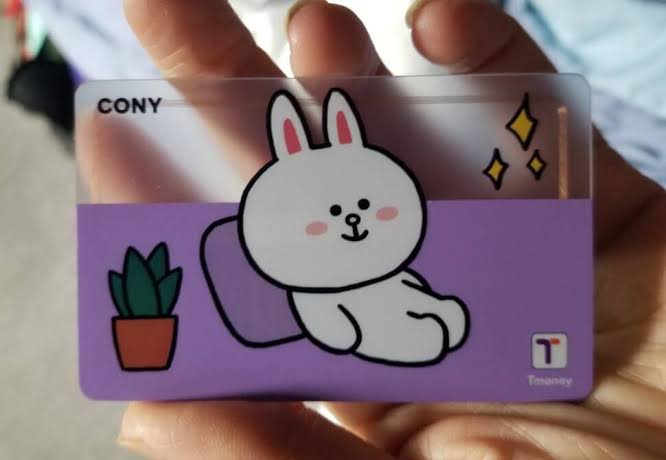
How do I add money?
T-money operates using a stored balance.
You add funds to the card before traveling.
Recharge facilities are commonly available at subway stations and convenience stores.
One important point for foreign visitors:
Do not assume every recharge machine accepts every international credit card.
Keeping some Korean won available can be useful.
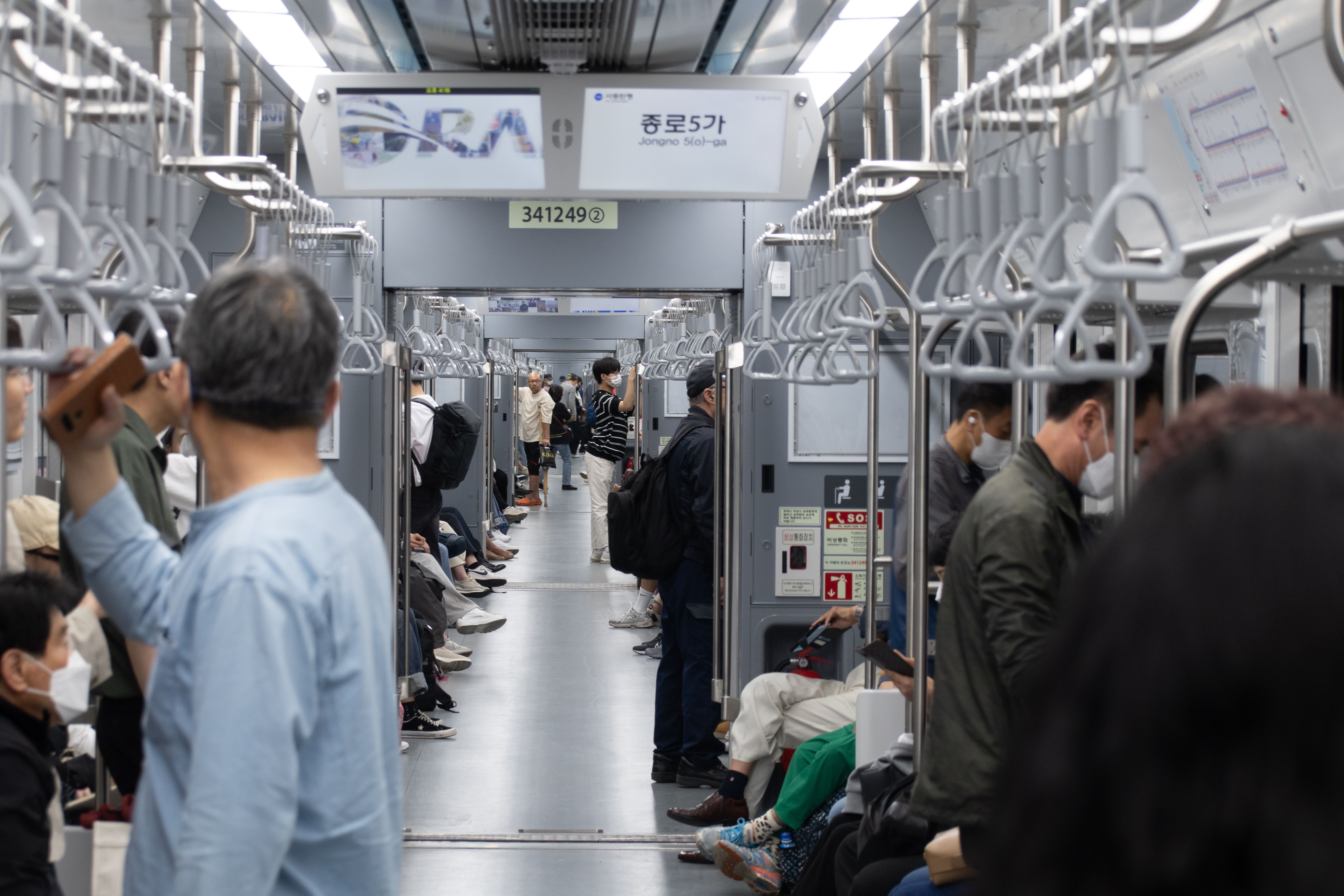
Using the subway
When entering the subway:
Find the correct station entrance
Check your destination
Confirm the direction
Tap your transportation card at the gate
Follow signs to your platform
When leaving:
Tap the same card again.
Your fare is calculated based on the journey.
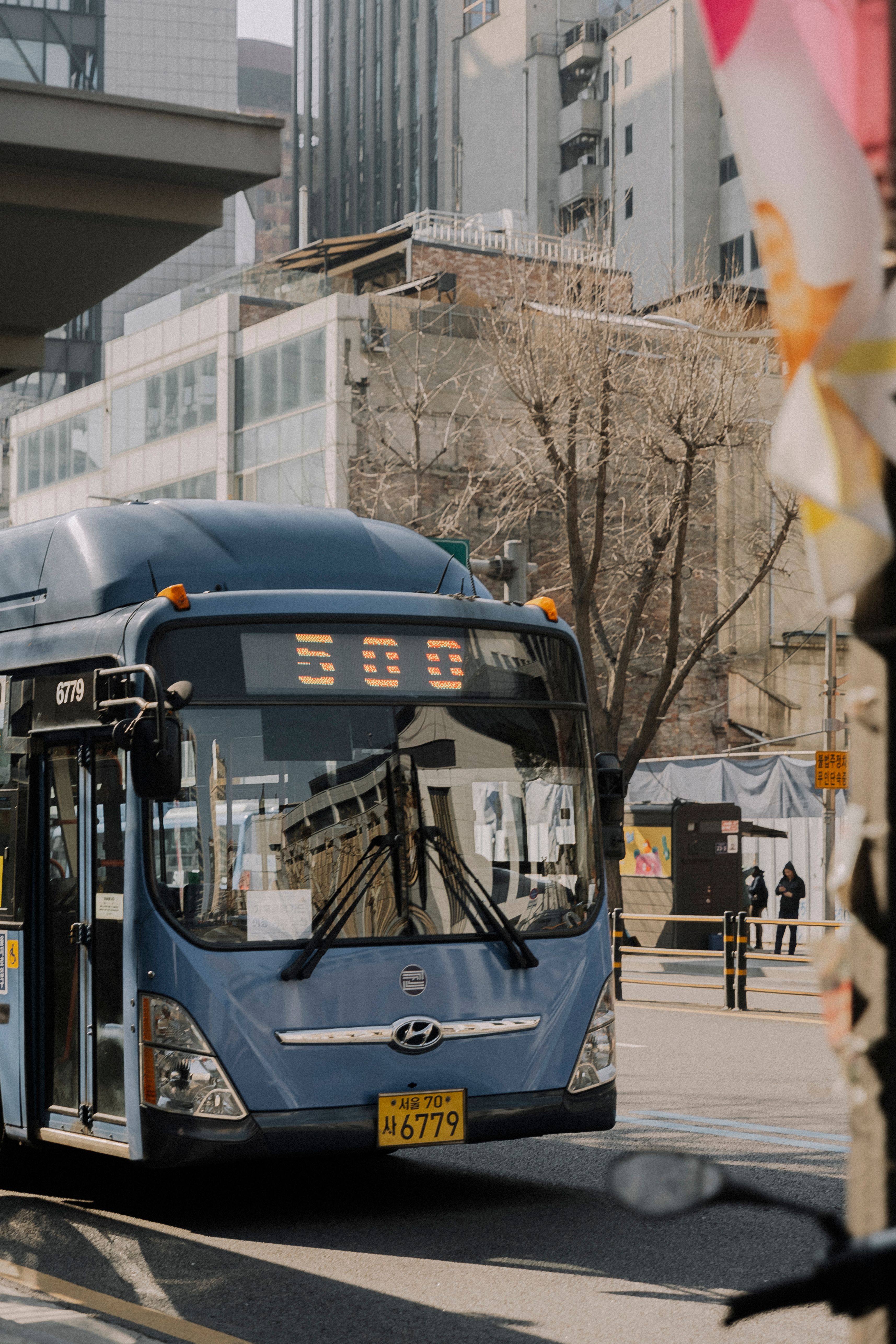
Using buses
Korean buses may feel slightly more difficult for first-time visitors, but they are extremely useful.
When boarding:
Tap your card.
Before getting off:
Press the stop button when your stop is approaching.
When leaving:
Tap your card again.
Tapping when getting off is important, especially for transfers and fare calculation.
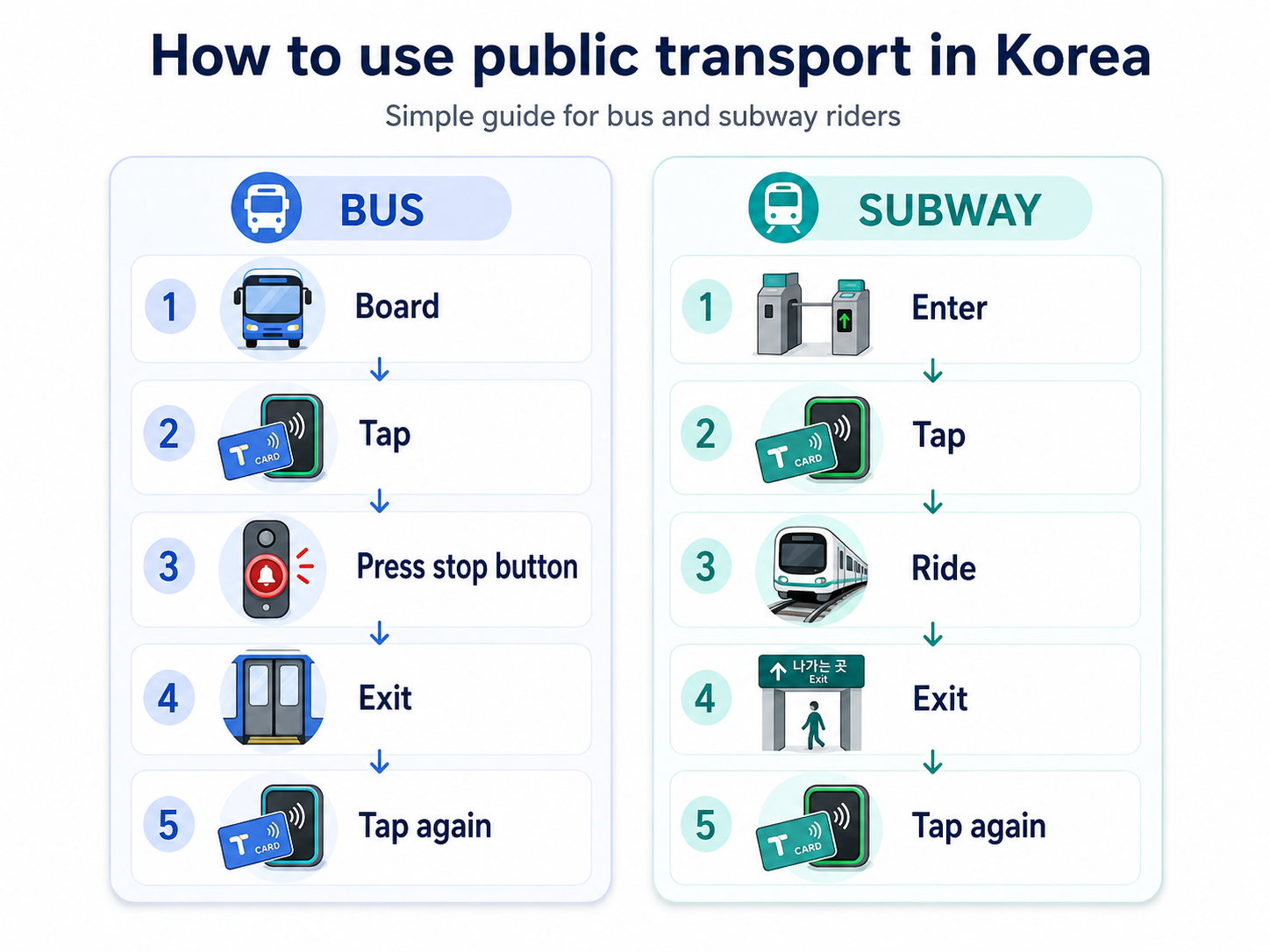
BUS
Board
→ Tap
→ Press stop button
→ Exit
→ Tap again
SUBWAY
Enter
→ Tap
→ Ride
→ Exit
→ Tap again
Why tapping out matters
Korea's transportation system supports transfers between buses and subways.
Properly tapping your card when entering and leaving helps the system calculate your journey correctly.
Do not simply walk off a bus without tapping because you saw other passengers moving quickly.
Use navigation apps
For transportation in Korea, navigation apps can help you determine:
Best route
Subway transfers
Bus numbers
Estimated arrival times
Walking distance
Station exits
For many visitors, Korean mapping services can provide better local transit information than relying only on global map applications.
Subway exits matter
Large Korean subway stations can have many exits.
Exit 1 and Exit 10 may place you several blocks apart.
When traveling to:
A clinic
Hotel
Restaurant
Shopping mall
check the recommended subway exit before leaving the station.
This can save significant walking time.
During rush hour
Seoul public transport can become crowded during weekday commuting periods.
If you are carrying:
Large luggage
Medical equipment
Several shopping bags
consider traveling outside peak periods when possible.
For medical travelers
Public transport is convenient before treatment, but it may not always be suitable afterward.
After some procedures, you may experience:
Swelling
Dizziness
Discomfort
Limited mobility
Sensitivity to crowded spaces
Follow your clinic's advice.
A taxi may be more appropriate after certain treatments.
Public transport checklist
✓ Get a transportation card
✓ Add sufficient balance
✓ Tap when entering
✓ Tap when exiting
✓ Check the correct subway direction
✓ Check your station exit
✓ Save your destination in Korean